
Expert Tips for Repairs to Concrete Steps | DIY & Professional Methods
Need to repair concrete steps? Whether you’re dealing with cracks, chips, or more severe damage, this guide will help you assess and fix the problems related to repairs to concrete steps. We’ll cover DIY methods and professional approaches to ensure your concrete steps stay safe and durable.
Are you struggling with cracks, chips, or other severe damage? Instead of worrying about safety, you can restore your
stairs to their former glory. Get
professional help with your concrete repair project.
Identifying the Damage on Concrete Steps
Before starting repairs, follow these steps to assess your concrete steps:
-
Identify the type and extent of damaged areas.
-
Recognize common issues such as cracks, chips, gaps, and voids that may compromise
structural integrity. -
Determine whether the damage is due to structural issues or simple wear and tear.
-
Use this assessment to choose the appropriate repair approach.
-
Select the right materials and methods based on an accurate assessment to ensure effective and durable
repairs.
Concrete steps are known for their durability, but even the toughest materials can chip and break
over time, so timely repairs are necessary to prevent worsening conditions and safety
hazards. Homeowners can repair concrete steps themselves if they assess the damage
correctly.
Here’s how to inspect and evaluate the damage.
Inspecting Cracks and Chips
Regular inspections help catch small issues before they escalate into costly repairs. Early signs of
damage, such as cracks, chips, and unevenness, can be identified through regular checks.
Use a chisel to remove any loose concrete material around the crack,
cracks, and chips, then clean the damaged area thoroughly to get a clear view of
the extent of the damage while chipping away any debris.
Evaluating Structural Integrity
Assess the structural integrity of your concrete steps to ensure their
safety and durability. Methods like the pull-out test and rebound hammer can provide insights into
the strength of the concrete without causing significant damage.
Additionally, ultrasonic pulse velocity testing can detect internal defects and assess the overall quality of the
concrete, giving a comprehensive view of its structural integrity.
Preparing the Concrete Surface for Repair
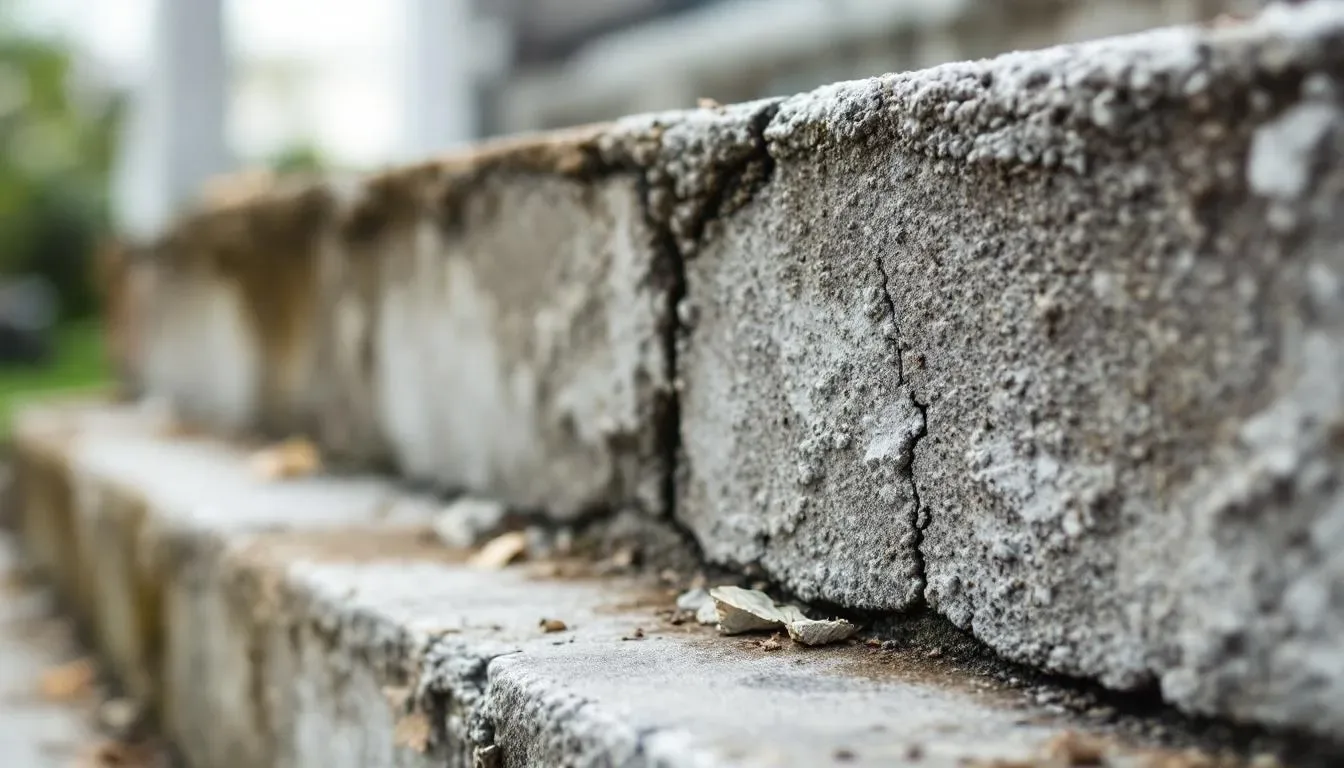
special concrete bonding adhesive to ensure a durable connection between the old and
new concrete.
Proper preparation ensures the new concrete material adheres well to the existing
concrete and lasts longer. This is especially important when bonding new material to old
concrete, as proper surface preparation and the use of concrete bonding
adhesive are crucial for a strong connection. Carefully assess the damaged concrete
and thoroughly prepare the area for effective and long-lasting repairs.
A well-prepared wood surface significantly boosts the durability of the repairs,
giving it an edge. This serves as a solid foundation for long-lasting results.
Cleaning and Removing Loose Debris
Cleaning the damaged area is the first step in the preparation process. Utilize
tools such as a wire brush or a stiff-bristle brush. These tools will help you
remove loose concrete, dust, and debris.
After cleaning, remove all small particles to ensure the surface is clear of obstructions. Before
applying repair materials, make sure the surface is slightly wet to promote better
adhesion.
Applying Concrete Bonding Adhesive
Concrete bonding adhesive improves the durability of patches on chipped or cracked steps.
Apply concrete bonding adhesive with a paintbrush, following the manufacturer’s
instructions closely.
Allow the adhesive to become tacky before proceeding with the next step to ensure a strong bond between the
old concrete and new concrete.
Learn more about sealant concrete and how to prepare the surface in our article: Top Tips
for Applying sealant on Concrete Surfaces.
Repairing Minor Damages in Concrete Steps
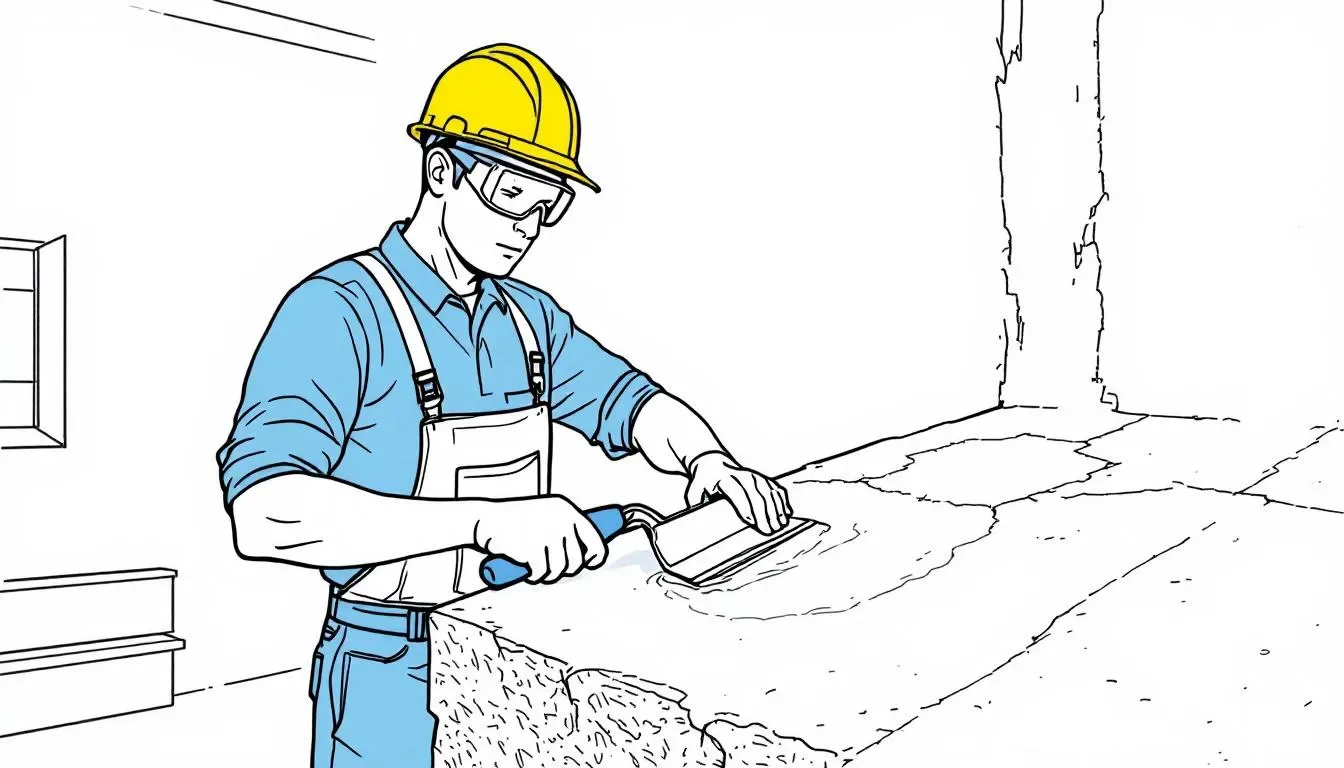
photo shows how a trowel is used to smooth the surface, ensuring a
smooth finish.
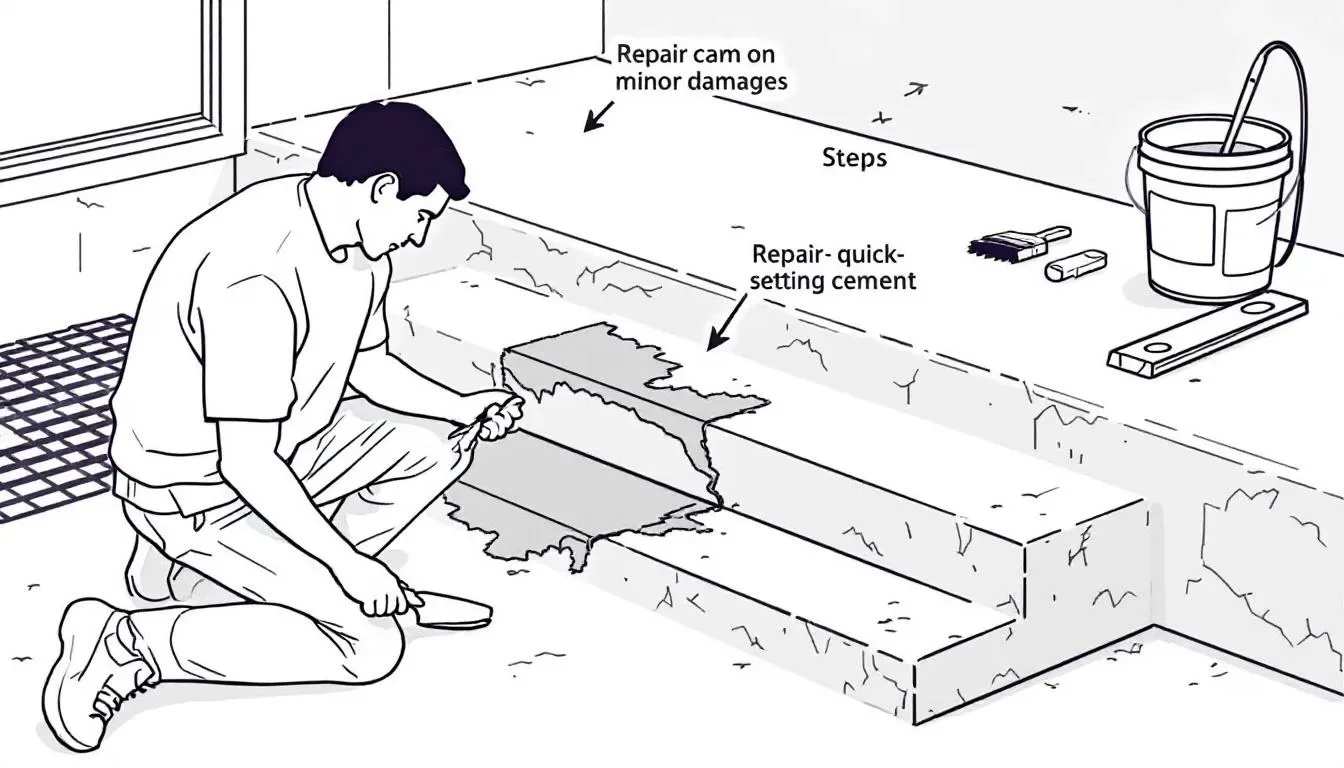
Quick-setting cement is ideal for minor damages like small chips and shallow cracks.
Concrete step repair for minor damages can involve patching, resurfacing, or using specialized
repair products. This type of cement is designed for quick
repairs, allowing for fast application and hardening.
Quick-setting cement ensures durable repairs for shallow cracks,
providing a seamless finish.
Using Quick-Setting Cement
To fix small imperfections, mix cement, sand, and water to
create a quick-setting concrete mix, making sure to create a cavity in the middle
of the dry mix before adding water to ensure even mixing. For minor separations, apply concrete bonding
adhesive and expandable concrete caulk can effectively fill the gaps, ensuring a
strong and durable repair.
Smoothing and Finishing
After applying the repair material, use a trowel to smooth out the
patched area. This tool helps integrate the new material with the existing concrete, ensuring it is
flush and provides a smooth finish.
Careful smoothing and finishing are necessary to blend the repaired area seamlessly with the rest of the complete
concrete steps.
Fixing Major Damages in Concrete Steps
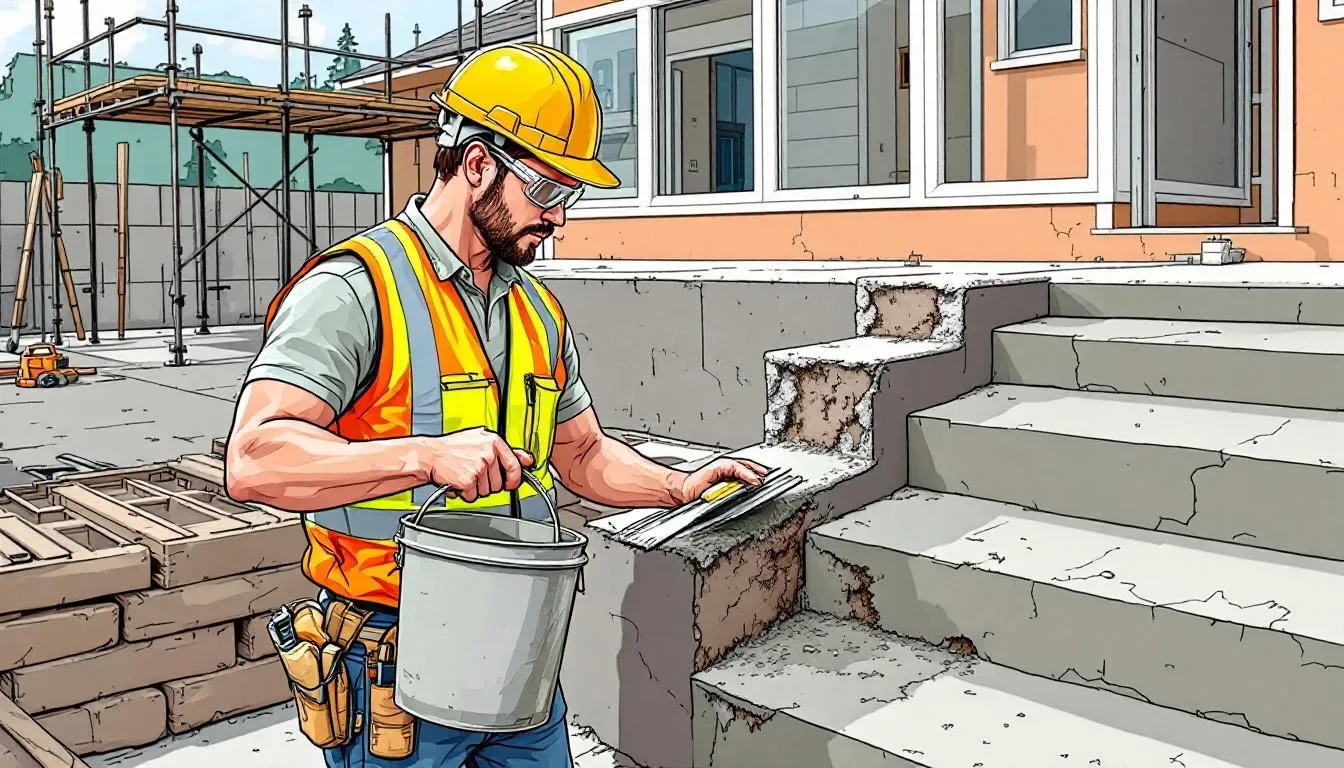
concrete into a mold to rebuild the damaged part of the step and restore its structural
integrity. This is when concrete repair is effective.
When dealing with major damages such as crumbling steps or large missing chunks, more extensive
repair methods are required. Fixing these issues is a more involved
project that may require advanced techniques and careful planning. In some cases, replacing the
damaged concrete steps entirely may be necessary. However, repairing the steps is often more
cost-effective and can restore them to their original function and appearance.
Let’s explore the steps involved in fixing major damages.
Creating a Mold for Broken Corners
For broken corners, creating a mold or form is essential to maintain the shape during the curing
process. Use a sturdy material for the mold and secure it properly to prevent any shifting that
could disrupt the curing of the concrete corner.
Pouring and Shaping New Concrete
Pouring new concrete requires precision and care. Follow these steps:
-
Apply concrete bonding adhesive to the existing concrete surface.
-
Pour the new concrete into the mold.
-
Compact the concrete well to prevent air pockets.
-
Use a trowel to shape and smooth the surface, ensuring it
matches the surrounding concrete. Achieving a good match is important for both appearance
and durability.
For some repairs, especially when attaching stones or bricks,
mortar may be used instead of or in addition to concrete to ensure stability and a
seamless finish.
Addressing Structural Issues
Structural issues like sinking steps or separation from adjacent structures indicate significant
underlying problems that require immediate attention. Identifying these major structural issues might involve
checking for signs of sinking or separation, which can create a safety hazard by
creating dangerous gaps between the steps and the house.
Promptly addressing structural issues ensures the safety and longevity of your
concrete steps. If the damage is too extensive for a DIY fix, it may be time to call in the
professionals. If you have serious concrete damage,
you need an expert.
Finishing Touches and Sealing
a sealer to the freshly repaired concrete to protect it from moisture and
damage.
Finishing touches and sealing enhance the durability and appearance of your repaired concrete steps.
Once these steps are completed, your repairs will be both durable and visually appealing. Proper
surface preparation and concrete bonding adhesives significantly improve the
longevity of your repairs.
A high-quality sealer protects the concrete from environmental damage and harsh weather conditions.
Polishing and Cleaning
After completing the repairs, follow these steps to achieve a smooth, professional
finish:
-
Polish and clean the work area.
-
Use a stiff brush to remove any debris or residues left from the
repair process. -
Ensure the surface is clean and smooth.
Applying a Concrete Sealer
Applying a high-quality concrete sealer is crucial for protecting the repaired steps from moisture
and wear. Follow the manufacturer’s instructions for application, ensuring uniform coverage and
optimal protection for your concrete steps.
Preventative Maintenance for Concrete Steps
Preventative maintenance prolongs the life of your concrete steps. Regular inspections and cleaning
routines help identify potential issues before they become significant problems, keeping the steps
safe and functional. It’s especially important to maintain concrete steps that are
adjacent to or part of a patio area, as this helps prevent structural damage and safety
hazards.
Proactive measures significantly enhance the durability of your concrete steps.
Regular Inspection and Cleaning
Conduct regular maintenance and inspections to protect your concrete steps from
future damage. Regular cleaning helps maintain the surface integrity and prevents the buildup of
dirt and debris that could cause wear and tear over time.
Protective Coatings and Sealants
Applying protective coatings and sealants every few years helps shield your concrete steps from
environmental damage. These treatments enhance the durability and appearance of your steps, ensuring they remain in
good condition for years to come.
Safety Tips for Concrete Step Repairs
Safety should always be a priority during concrete step repair projects to prevent
injuries. Wear appropriate safety equipment, such as gloves, goggles, and masks, to
protect yourself from harmful substances and debris. Follow
safety precautions when handling cement and chemicals to minimize risks.
Additionally, using proper lifting techniques can help avoid back injuries when moving heavy objects
and materials.
Summary
In summary, repairs to concrete steps involves several crucial steps, from identifying the damage to
applying finishing touches and sealants. Whether dealing with minor cracks or major structural
issues, following a systematic approach ensures effective and durable repairs. By
taking preventative measures and prioritizing safety, you can maintain the integrity and appearance
of your concrete steps for years to come.
Frequently Asked Questions
What are the common types of damage found on concrete steps?
Concrete steps often suffer from cracks, chips, gaps, and voids.
Addressing these issues promptly will ensure safety and maintain their appearance.
How do I prepare the concrete surface for repair?
To successfully prepare the concrete surface for repair, clean the damaged
area well with a wire brush, and don’t forget to apply concrete bonding
adhesive. This will ensure a strong bond for your repair and set you up for success!
What is the best method for repairing minor cracks in concrete steps?
For repairing minor cracks in concrete steps, quick-setting cement
is your best bet, enabling speedy application and hardening. Embrace this effective method to keep
your steps safe and durable!
How can I address major structural issues in concrete steps?
To tackle major structural issues effectively, focus on reattaching detached steps with heavy-duty
adhesives and leveling sunken steps using polyurethane foam. Taking these concrete actions will
enhance the stability and safety of your structure!
Why is it important to apply a concrete sealer after repairs?
Applying a concrete sealer after repairs is crucial as it shields your work from
moisture and environmental damage, ensuring long-lasting durability and a great appearance. Invest in this step for
a stronger, more resilient finish!

Have questions?
Get in touch — we are happy to help and answer any question.
Keep reading
Related posts
 Guides
Parging: Why It Cracks and Falls Off — and How to Fix It for Good
Parging protects the exposed top of your foundation, but freeze-thaw cycles make cheap coats crack and fall off. Here is why it fails, when to repair…
Read more Guides
Basement Waterproofing Cost Guide for Toronto & the GTA
What really drives basement waterproofing cost in Toronto and the GTA: interior vs exterior systems, wall length, access, drainage and crack injection, plus how to compare…
Read more Guides
Repair or replace? What GTA homeowners should know about damaged concrete
Told your concrete has to be torn out? In most cases cracks, spalling and worn surfaces can be repaired for far less. An honest guide to…
Read more