
Top Foundation Waterproofing Solutions for Lasting Protection
Foundation waterproofing is crucial for protecting your house from water damage. This article outlines why it’s important, the best methods available, and how to choose the right waterproofing solutions for your needs.
Importance of Foundation Waterproofing
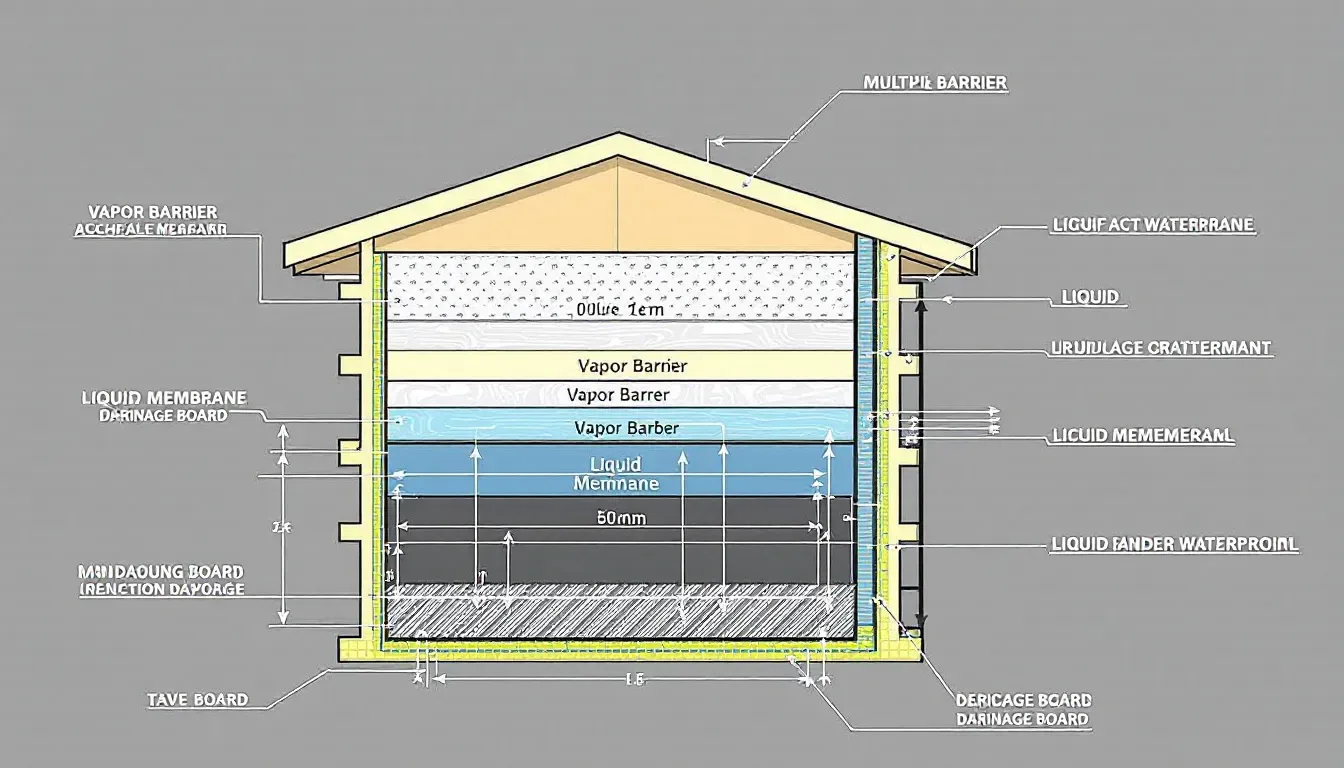
Foundation waterproofing is more than just a protective measure; it is a
necessity for maintaining the structural integrity and longevity of your
building. Preventing water infiltration through liquid and vapor barriers
guards against hydrostatic pressures and capillary action. This means your
foundation walls remain dry and robust, avoiding potential moisture issues
that could compromise the structure’s stability.
The proximity of the water table to the foundation can significantly increase
the risk of moisture infiltration, as higher water tables create greater
hydrostatic pressure against below-grade walls. In such conditions, effective
waterproofing becomes even more critical to prevent water intrusion.
Damp proofing, which resists moisture without hydrostatic pressure, is often
confused with waterproofing. However, true waterproofing systems are designed
to prevent water passage under hydrostatic conditions, ensuring comprehensive
protection. Proper surface preparation, including thorough cleaning and
repairing of foundation walls, is crucial for the effective adhesion of
waterproofing materials. Exposing the entire foundation wall during
waterproofing ensures that every inch is covered, providing a complete barrier
against water intrusion.
Effective waterproofing safeguards basements from moisture, preserving the
structural integrity and supporting the long-term health of the building.
Inadequate waterproofing and drainage systems can lead to extensive and costly
problems, such as mold growth, structural damage, and even foundation failure.
Investing in exterior waterproofing and a robust basement waterproofing system
prevents water infiltration, protects your investment, and ensures the
longevity of your home or building.
Hydrostatic Pressure and Foundation Damage
Hydrostatic pressure is one of the most significant threats to the integrity
of foundation walls. This pressure builds up when water accumulates in the
soil surrounding the foundation, exerting force against the walls and
potentially forcing water through even the smallest cracks and joints. Over
time, unchecked hydrostatic pressure can lead to water infiltration,
structural damage, and costly repairs.
To effectively combat hydrostatic pressure, it is essential to install a
robust waterproofing system that includes both a high-quality waterproofing
membrane and a reliable drainage system. The waterproofing membrane acts as a
barrier, preventing water from penetrating the foundation walls, while the
drainage system works to direct water away from the building, reducing the
pressure exerted on the foundation. Proper preparation of the foundation
walls—such as thorough cleaning and repairing any cracks or damage—is crucial
before installing the membrane to ensure optimal adhesion and effectiveness.
By addressing hydrostatic pressure with a comprehensive waterproofing
approach, you can protect your foundation from water intrusion and maintain
the long-term stability of your building.
Water Infiltration and Foundation Damage
Water infiltration is a leading cause of foundation damage, often resulting in
compromised structural integrity and costly repairs. Water can enter
foundation walls through cracks, joints, or porous surfaces, as well as from
saturated soil surrounding the building. Once inside, moisture can lead to
mold growth, deterioration of building materials, and even foundation
settlement.
To prevent water infiltration, it is essential to install a durable
waterproofing membrane on the exterior of the foundation walls. This membrane
serves as a critical barrier, blocking water from entering the foundation.
Equally important is a well-designed drainage system that efficiently channels
water away from the foundation, further reducing the risk of moisture
intrusion. Regular inspections and maintenance of both the waterproofing
membrane and drainage system are vital to ensure ongoing protection and to
address any issues before they escalate.
By combining a high-quality waterproofing system with proactive maintenance,
you can effectively prevent water infiltration and safeguard your foundation
for years to come.
Effective Drainage Systems for Foundations
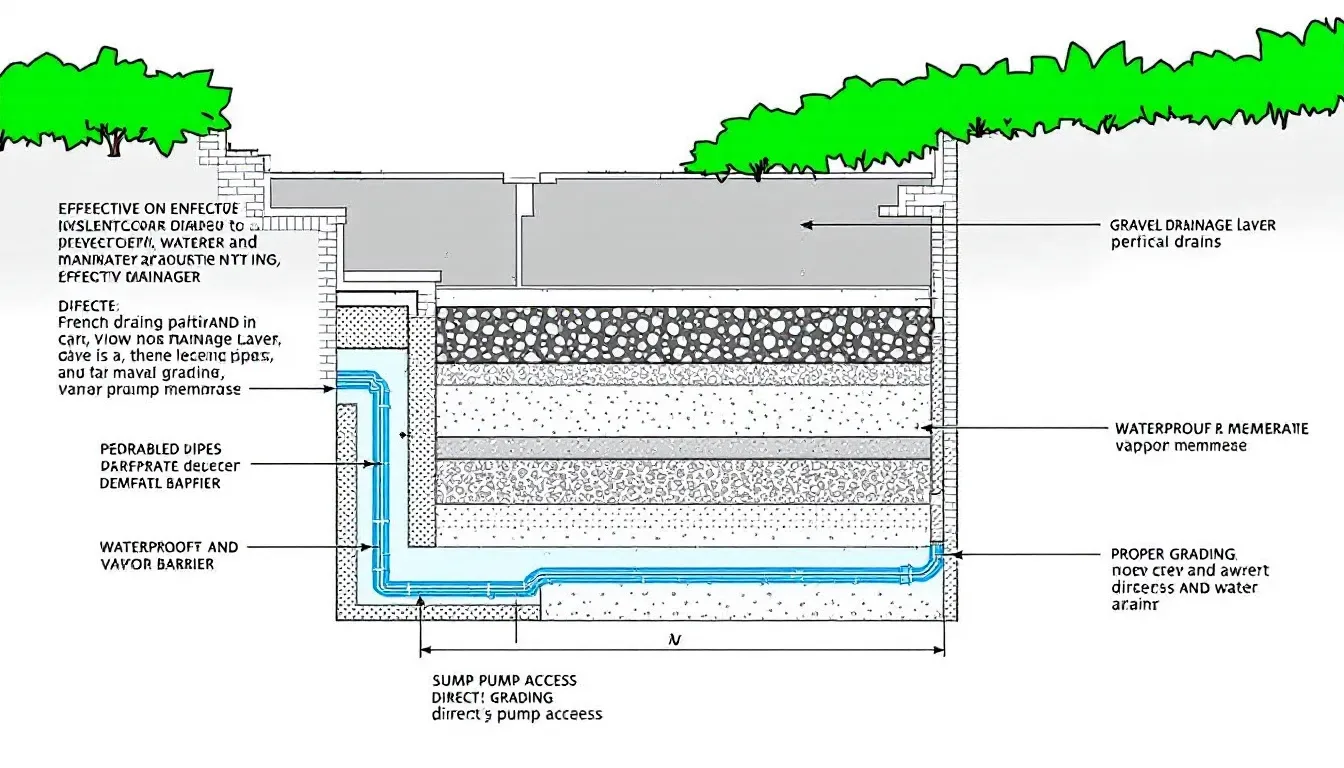
Drainage systems play a pivotal role in foundation waterproofing by:
-
Collecting and directing water away from the foundation, thus reducing
hydrostatic pressure. -
Ensuring proper grading around the home so that water flows away from the
foundation, preventing potential water accumulation and minimizing the
risk of water damage. -
Supporting the effectiveness of your waterproofing system by channeling
moisture toward a sump pump or discharge point.
For optimal results, effective drainage systems should be installed around the
entire perimeter of the foundation to ensure comprehensive water redirection
and protection.
Two common types of drainage systems are footing drains and weeping tiles.
Footing drains, typically installed a few inches below the top of the footing
and at least six inches below the top of the slab, are crucial for channeling
water away from the foundation.
Weeping tile systems, on the other hand, utilize a perforated pipe layout to
manage excess water around the foundation, helping to alleviate hydrostatic
pressure. Both systems are essential for maintaining dry, below-grade walls
and preventing structural damage.
Footing Drains
Footing drains are designed to channel water away from the foundation, keeping
below-grade walls dry and protecting the structure from water intrusion.
Typically placed a couple of inches below the footing’s top and at least six
inches below the slab’s top, these drains effectively manage water around the
foundation, ensuring they are positioned appropriately in relation to ground
level. Directing water away from the base of the structure, footing drains
prevent water accumulation and reduce hydrostatic pressure.
Installing footing drains involves laying perforated pipes adjacent to the
foundation footing. These pipes collect groundwater and direct it away from
the foundation, ensuring that the below-grade walls remain dry. This method is
highly effective in preventing water infiltration and maintaining the
structural integrity of concrete foundations.
Weeping Tile
Weeping tile systems are another critical component of effective drainage.
They:
-
Collect and direct water away from the foundation, preventing water
accumulation and reducing hydrostatic pressures. -
Utilize a perforated pipe layout to effectively manage excess water around
the foundation. -
Help alleviate hydrostatic pressure and reduce the risk of water damage.
The perforated pipes in these systems collect groundwater that could otherwise
accumulate around the foundation and cause structural issues. Directing water
away from the foundation, weeping tile systems reduce the risk of leaks and
structural damage from high hydrostatic pressures. This makes them an
essential component of any comprehensive waterproofing system.
Advanced Waterproofing Membranes
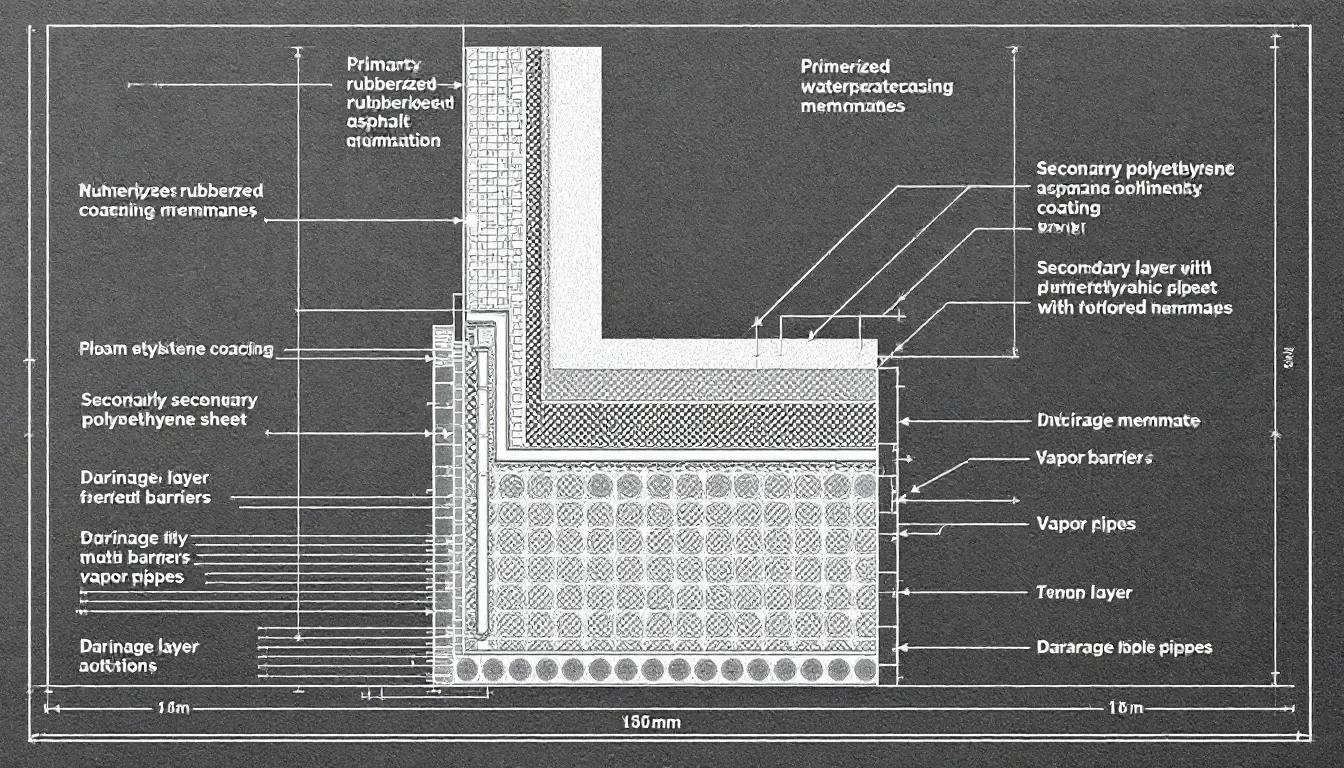
Waterproofing membranes are crucial for blocking moisture from reaching the
foundation’s interior. These membranes come in various types, including:
-
Liquid-applied membranes
-
Sheet membranes
-
Other layered systems that provide robust protection against water
intrusion The choice of membrane depends on the specific conditions of
your project and the level of protection required.
Applying an even coat of the chosen waterproofing membrane is essential for
achieving a continuous and effective barrier.
Polyguard offers a variety of foundation waterproofing products, including
sheet and fluid-applied options. For instance, the Blindside Membrane is a
thick waterproofing option that bonds mechanically with concrete as it cures,
providing a durable barrier to protect against water.
In contrast, the 650 PRM is a self-healing waterproofing membrane that creates
a continuous barrier against water and moisture vapor infiltration. Properly
applied, these membranes can create a comprehensive barrier against moisture
from surrounding soil.
Cold Applied Membranes
Cold applied membranes are easy to install, making them a practical choice for
foundation waterproofing. These membranes create a strong barrier that
effectively prevents water infiltration and protects the foundation from
damage during installation.
They perform well in a variety of cold weather conditions, ensuring reliable
waterproofing throughout different seasons.
Sheet Membranes
Sheet membranes are typically made from flexible and waterproof substances
like rubber or asphalt. These membranes are suitable for both vertical
structures and horizontal applications, providing versatile protection along
the line against water intrusion.
Their use in various structures makes them an essential component of a
comprehensive waterproofing system.
Liquid Applied Membranes
Liquid applied membranes:
-
Form a continuous layer, effectively sealing the foundation against
moisture. -
Are adaptable and can easily conform to the irregularities of the
foundation surface, ensuring comprehensive coverage and protection. -
Create a seamless barrier as they cure, preventing water infiltration and
protecting the foundation from hydrostatic pressure.
These membranes are particularly useful for complex foundation structures
where traditional sheet membranes may not provide adequate coverage. Providing
a protective barrier against moisture intrusion, they maintain the structural
integrity of the foundation.
Preparation and Application Techniques
Proper preparation is the cornerstone of effective waterproofing. The success
of waterproofing largely depends on the preparation of the substrate. Applying
a primer to the foundation surface before installing the waterproofing
membrane is recommended for better adhesion. Mechanical fastening of membrane
terminations is necessary to prevent water infiltration at seams.
Key points about waterproofing membranes and systems:
-
Waterproofing membranes should overlap at joints to ensure complete
coverage and prevent leaks. -
A good waterproofing system allows for customization based on site
conditions, materials, budget, and protection requirements. -
Effective preparation and application techniques result in long-lasting
waterproofing.
A high-quality waterproofing job requires skilled application and attention to
detail to ensure durable, long-lasting results.
Surface Cleaning
Cleaning the foundation surface is a critical first step in preparing for
waterproofing. Foundation surfaces should be free of dirt and debris to allow
for optimal adhesion of waterproofing membranes. A clean surface directly
contributes to the effectiveness and longevity of the waterproofing process.
Removing soil, dust, and other contaminants ensures that the waterproofing
materials adhere properly and provide a seamless barrier against moisture.
This step is essential for the overall success of the waterproofing project.
Repairing Cracks and Damage
Visible cracks, honeycombing, or surface defects must be repaired in poured
concrete foundations before waterproofing. Repairing any damage to the
foundation walls is essential before applying waterproofing materials. This
step ensures effective protection against moisture. For fieldstone or cinder
block foundations, repointing and potentially patching are necessary steps
before waterproofing.
Repairing these defects ensures that waterproofing materials can effectively
seal the foundation and prevent water infiltration. This step is vital for
maintaining the structural integrity and durability of the foundation repairs.
Applying Waterproof Coatings
Waterproof coatings are essential for protecting foundation walls against
moisture intrusion and ensuring long-term structural integrity. Proper
preparation of the foundation surface is crucial for the effective adhesion of
waterproof paint. These membranes are designed to cure quickly, allowing for
faster project progression.
The application of waterproof coating should be done methodically to ensure
that all areas are adequately covered and sealed, with special attention to
comprehensive protection against water infiltration and maintaining the
foundation’s cover integrity.
Protecting Below-Grade Walls
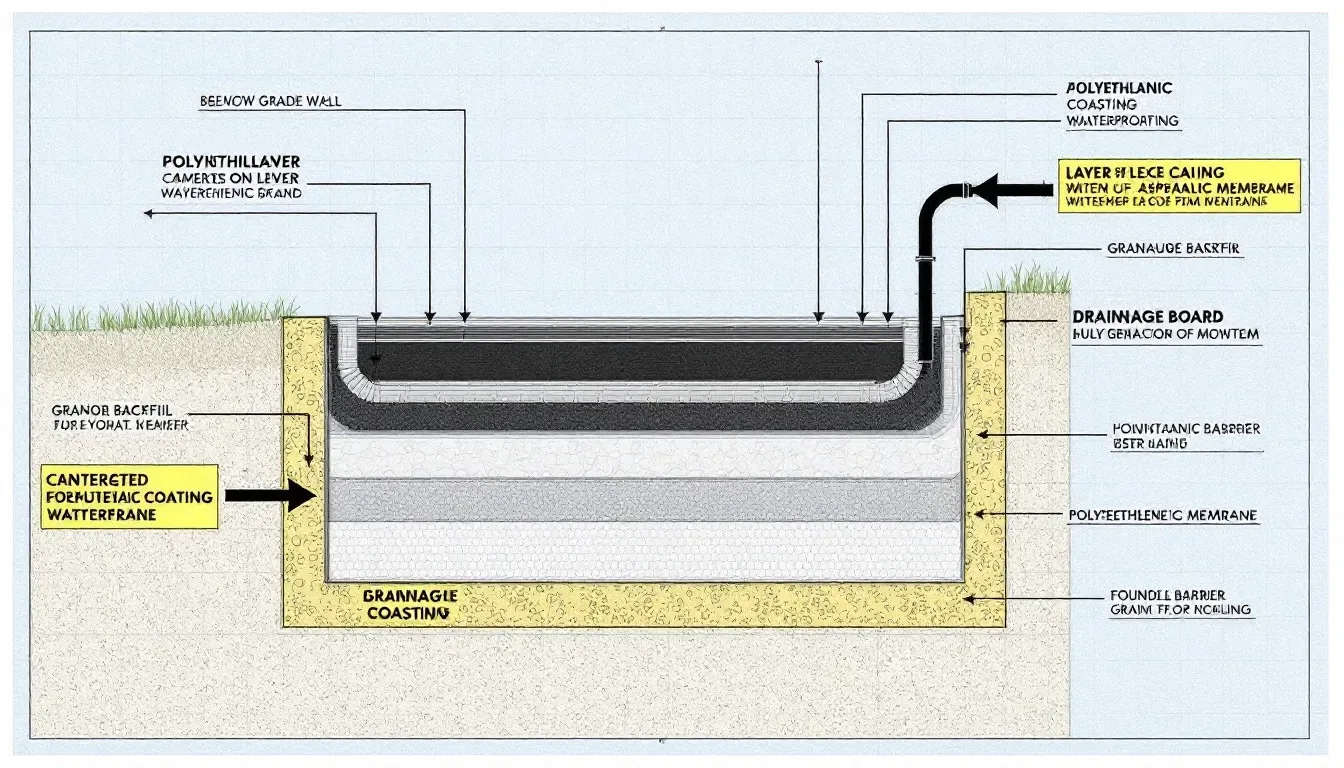
Protecting below-grade walls from water infiltration is crucial for
maintaining the structural integrity of the concrete foundation. Larger cracks
in the foundation require appropriate concrete repair products to ensure an
effective waterproofing application. Cracks in foundations must be assessed
for width and location to determine the appropriate foundation crack repair
method.
In addition, specific materials or techniques may be used to support the
waterproofing membrane and drainage systems, reinforcing the overall system
and helping to ensure long-term effectiveness and structural stability.
Positive-side waterproofing involves applying a membrane outside the structure
to prevent water entry. The waterproofing membrane should be installed
vertically on foundation walls for optimal results. This method ensures that
the foundation is protected from both liquid water and vapor, maintaining its
durability and integrity.
Interior Foundation Waterproofing Solutions
While exterior waterproofing is often the first line of defense against water
infiltration, interior foundation waterproofing solutions can provide valuable
protection in certain scenarios. Interior solutions, such as waterproof
sealants and coatings, are applied directly to the inside surface of
foundation walls to help prevent water from entering the basement or crawl
space. These methods are particularly useful when exterior access is limited,
or when additional protection is needed for existing foundations.
Interior waterproofing can also be an effective way to address minor leaks or
dampness, especially when paired with a comprehensive waterproofing system
that includes both interior and exterior components. However, it is important
to note that interior solutions may require more frequent repairs and
maintenance compared to exterior waterproofing, and may not address the root
cause of water infiltration. For optimal protection, consider a tailored
approach that combines both interior and exterior waterproofing methods to
ensure your foundation walls remain dry and protected.
Insulated Concrete Forms (ICF) and Waterproofing
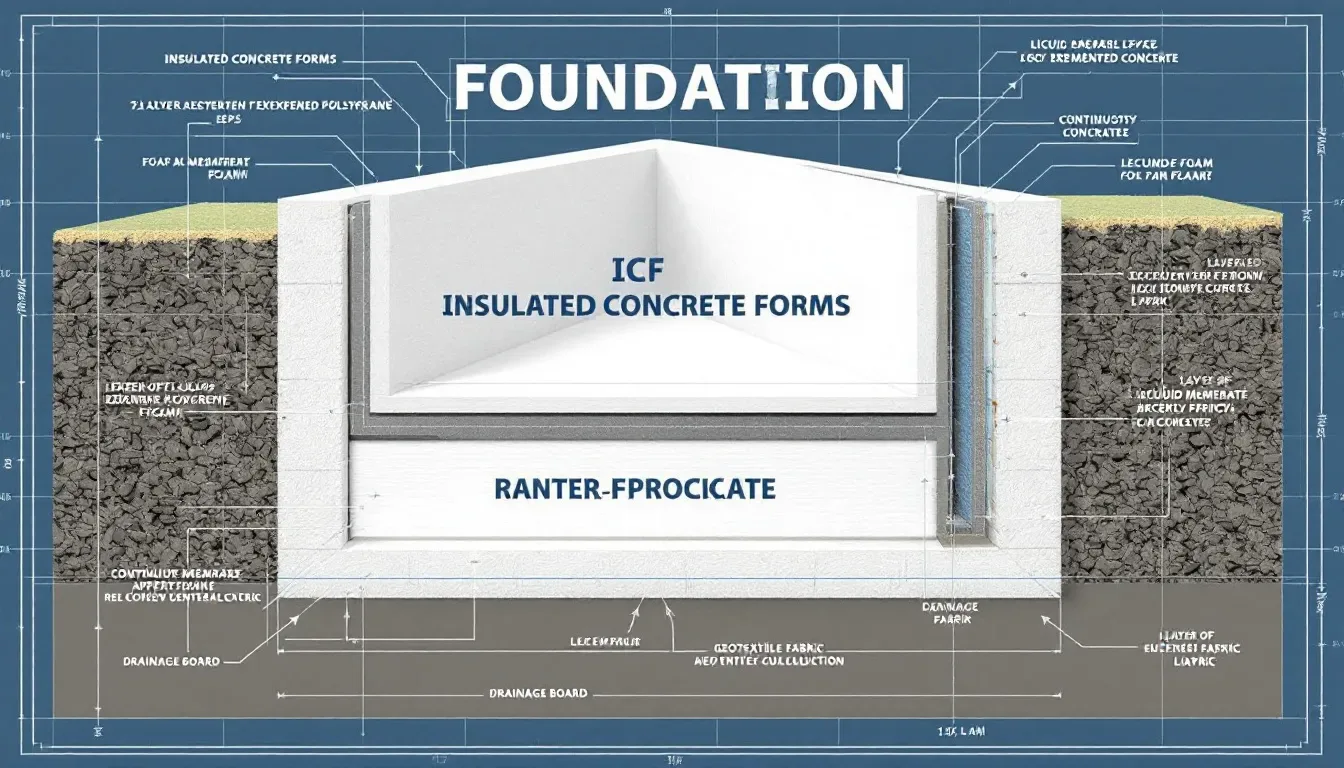
Insulated Concrete Forms (ICF) are lightweight, energy-efficient forms used
for constructing walls and foundations. Waterproofing below-grade ICF walls
typically involves applying a waterproof membrane and may require a drainage
system to prevent moisture intrusion. Incorporating a drainage system is
crucial to divert water away and enhance the effectiveness of waterproofing
solutions applied to ICF walls.
Using ICF with proper waterproofing and drainage provides a durable and
moisture-resistant foundation, ensuring longer longevity and less maintenance.
This combination offers a robust solution for modern construction projects.
Cold Weather Considerations for Waterproofing
Cold weather presents unique challenges for waterproofing foundation walls, as
low temperatures can impact both the installation and performance of
waterproofing membranes. In freezing conditions, some membranes may become
brittle, reducing their flexibility and increasing the risk of cracking or
poor adhesion to the foundation walls. This can compromise the effectiveness
of the entire waterproofing system.
To ensure reliable protection in cold climates, it is essential to select a
waterproofing membrane specifically designed for cold weather applications.
Always follow the manufacturer’s guidelines for installation, including any
special requirements for surface preparation and curing times. Before
installing the membrane, make sure the foundation walls are thoroughly cleaned
and free of moisture, as proper adhesion is critical for long-term
performance. Additionally, verify that the drainage system is functioning
properly to direct water away from the foundation, preventing ice buildup and
water intrusion during freeze-thaw cycles.
By taking these precautions, you can maintain the integrity of your
waterproofing system and protect your foundation walls, even in challenging
cold weather conditions.
Backfilling and Landscaping Considerations
Proper backfilling and landscaping are essential for maintaining the integrity
of the waterproofing system. Protective panels, such as insulation boards, can
help maintain the integrity of waterproofing during backfilling. Care should
be taken during backfilling to avoid damaging the waterproofing membrane,
drainage systems, and window wells. Crushed stone is recommended as a backfill
material to enhance drainage around the foundation.
Proper grading around the foundation is crucial, as it directs water away to
prevent pooling. Downspouts manage water drainage to prevent moisture levels
from increasing near the foundation. Following these guidelines ensures that
the foundation remains dry and protected.
Choosing the Right Waterproofing Products
Selecting high-quality waterproofing materials typically involves ensuring
minimal seams and full adhesion to the substrate to prevent water
infiltration. For smaller projects, lighter waterproofing products may
suffice, given that these areas typically do not experience significant
standing water. Applying waterproof coatings effectively involves following
manufacturer guidelines for the best results.
Consulting with professionals can help develop tailored solutions that address
the unique requirements of each foundation waterproofing project.
Efficiency in waterproofing application is key, especially in high-profile
projects where delays can lead to increased costs and risks. Effective
waterproofing can significantly decrease overall moisture levels in the home,
thereby reducing the likelihood of mold growth.
Common Foundation Waterproofing Mistakes
Avoiding common mistakes is essential for ensuring the effectiveness and
longevity of your foundation waterproofing system. One of the most frequent
errors is inadequate preparation of the foundation walls, such as failing to
thoroughly clean the surface or neglecting to repair cracks and other damage
before installing the waterproofing membrane. Skipping these steps can lead to
poor adhesion and allow water to penetrate the foundation.
Another common mistake is using low-quality waterproofing materials or
installing the membrane incorrectly, which can compromise the entire
waterproofing system. Additionally, overlooking the importance of a properly
functioning drainage system can result in water accumulation and increased
hydrostatic pressure against the foundation walls.
To achieve optimal waterproofing results, always use high-quality materials,
follow manufacturer instructions for installation, and ensure all surfaces are
clean and repaired before applying the membrane. Regular inspections and
maintenance of both the waterproofing membrane and drainage system are also
essential to catch and address any issues early. By taking these steps, you
can maximize the effectiveness of your waterproofing system and protect your
foundation from water damage.
Summary
In summary, foundation waterproofing is an essential aspect of protecting your
home or building from water infiltration and structural damage. From effective
drainage systems and advanced waterproofing membranes to proper preparation
and application techniques, each step plays a crucial role in ensuring lasting
protection.
Investing in high-quality waterproofing systems and materials not only
preserves the structural integrity of your foundation but also reduces
long-term repair costs. By following the guidelines and tips provided in this
guide, you can achieve optimal waterproofing results and protect your
investment for years to come.
Frequently Asked Questions
What is the difference between damp proofing and waterproofing?
Damp proofing effectively resists moisture but is not designed for conditions
with hydrostatic pressure, whereas waterproofing offers complete protection
against water infiltration even in those challenging situations. Understanding
this distinction is crucial for selecting the right protection for your
property’s needs.
Why is surface preparation important in waterproofing?
Surface preparation is essential for ensuring the effective adhesion of
waterproofing materials, directly influencing the longevity and performance of
the waterproofing system. Without proper preparation, the waterproofing may
fail, compromising the intended protection.
How do footing drains and weeping tiles help in foundation waterproofing?
Footing drains and weeping tiles are effective in foundation waterproofing as
they collect and redirect water away from the foundation, thereby minimizing
hydrostatic pressure and preventing water build-up around below-grade walls.
This ensures a dry and stable foundation.
What are the benefits of using insulated concrete forms (ICF) in foundation
construction?
Using insulated concrete forms (ICF) in foundation construction offers
significant benefits, including energy efficiency, durability, and moisture
resistance when paired with appropriate waterproofing and drainage measures.
These advantages contribute to a more sustainable and resilient building.
What should I consider when choosing waterproofing products?
When choosing waterproofing products, prioritize high-quality materials with
minimal seams and full adhesion to the substrate, while also ensuring they
meet the specific requirements of your project and environmental conditions.
This will enhance the effectiveness and longevity of your waterproofing
solution.

Have questions?
Get in touch — we are happy to help and answer any question.
Keep reading
Related posts
 Basement
Essential guide to waterproofing of concrete for lasting protection
Don't let water destroy your home. Our step-by-step guide shows you how to properly seal concrete and avoid costly repairs. Find out how to fix it…
Read more Basement
Best Tips to Repaint Basement Floor Easily
Transform your basement with a fresh, durable floor finish. Discover practical tips for a successful repainting project. Read the article for details!…
Read more Guides
Parging: Why It Cracks and Falls Off — and How to Fix It for Good
Parging protects the exposed top of your foundation, but freeze-thaw cycles make cheap coats crack and fall off. Here is why it fails, when to repair…
Read more